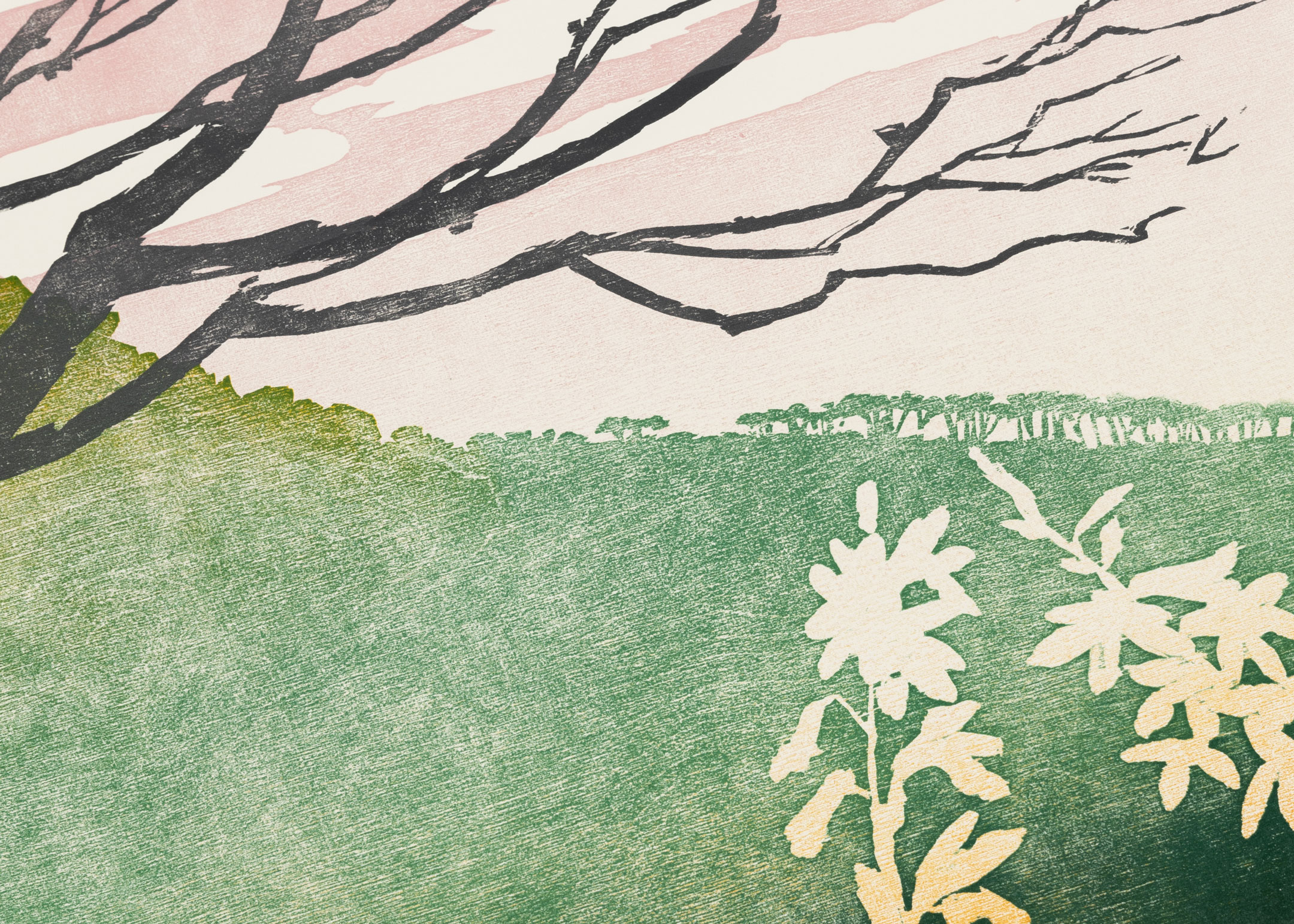
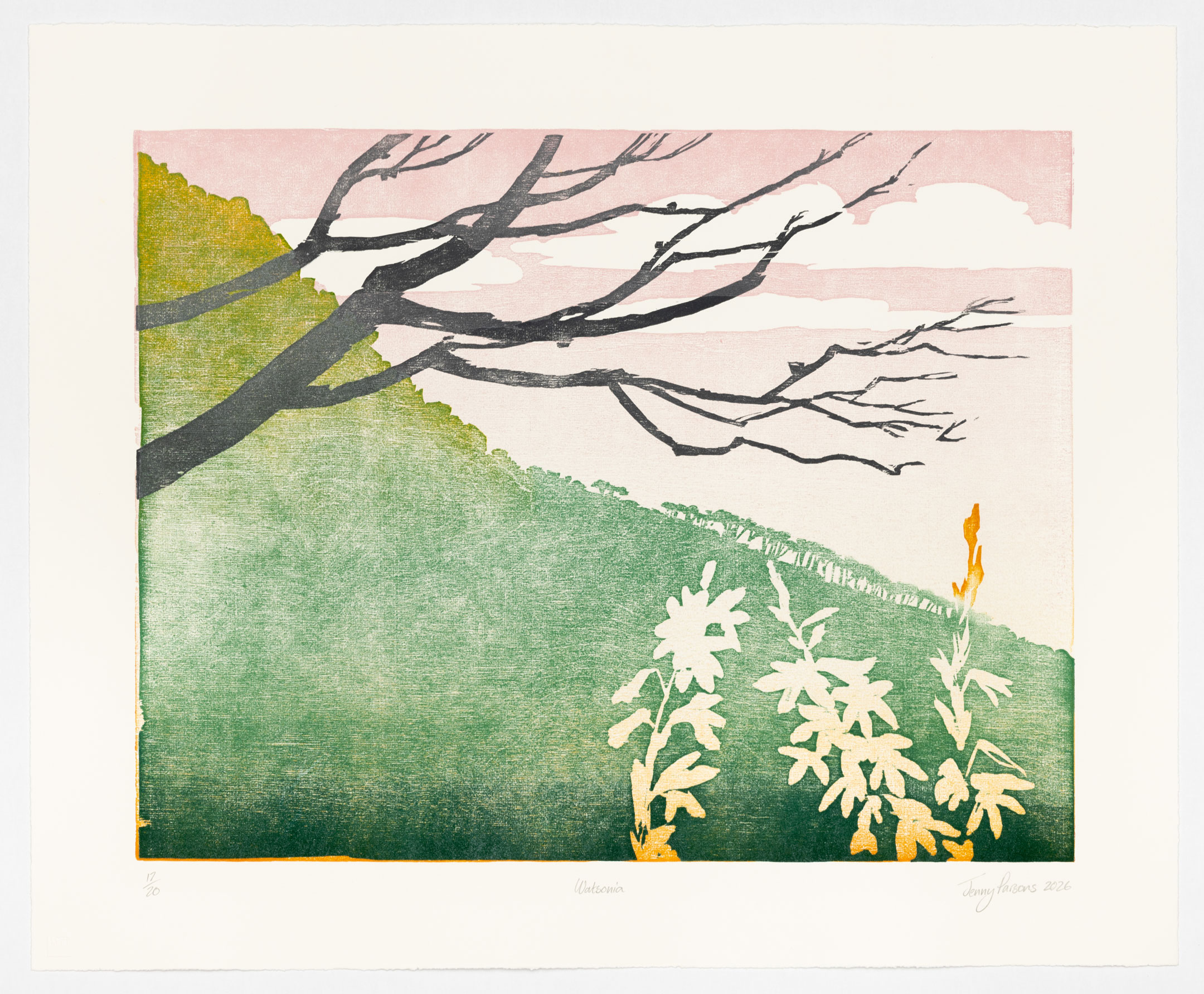
Watsonia, 2026
Six colour woodcut on 290 gsm 100% cotton rag
Paper size: 54 x 66 cm
Image size: 42x 54 cm
Image size: 42x 54 cm
Edition of 20
R 11,500.00 (Unframed)
EnquireProcess
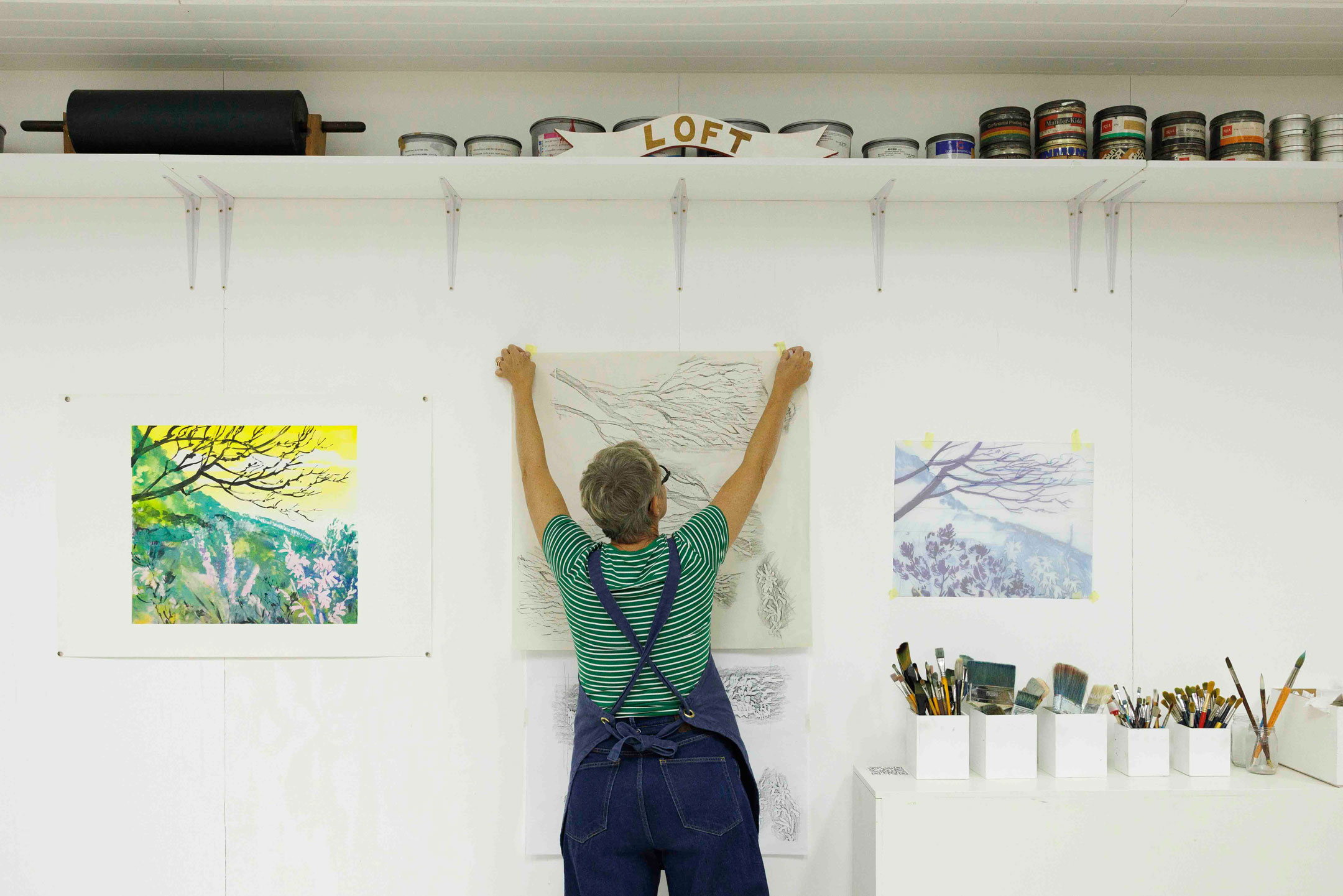
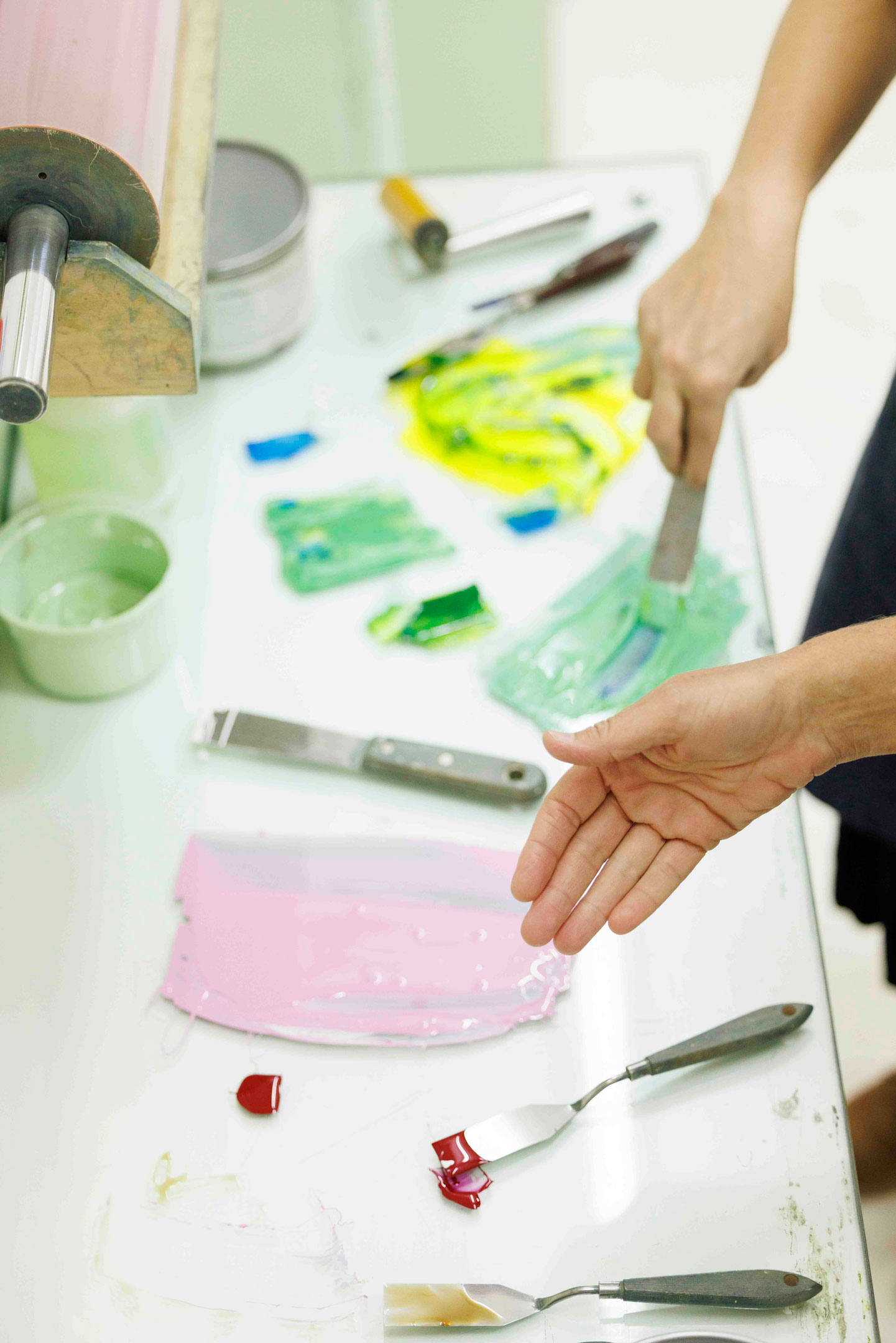
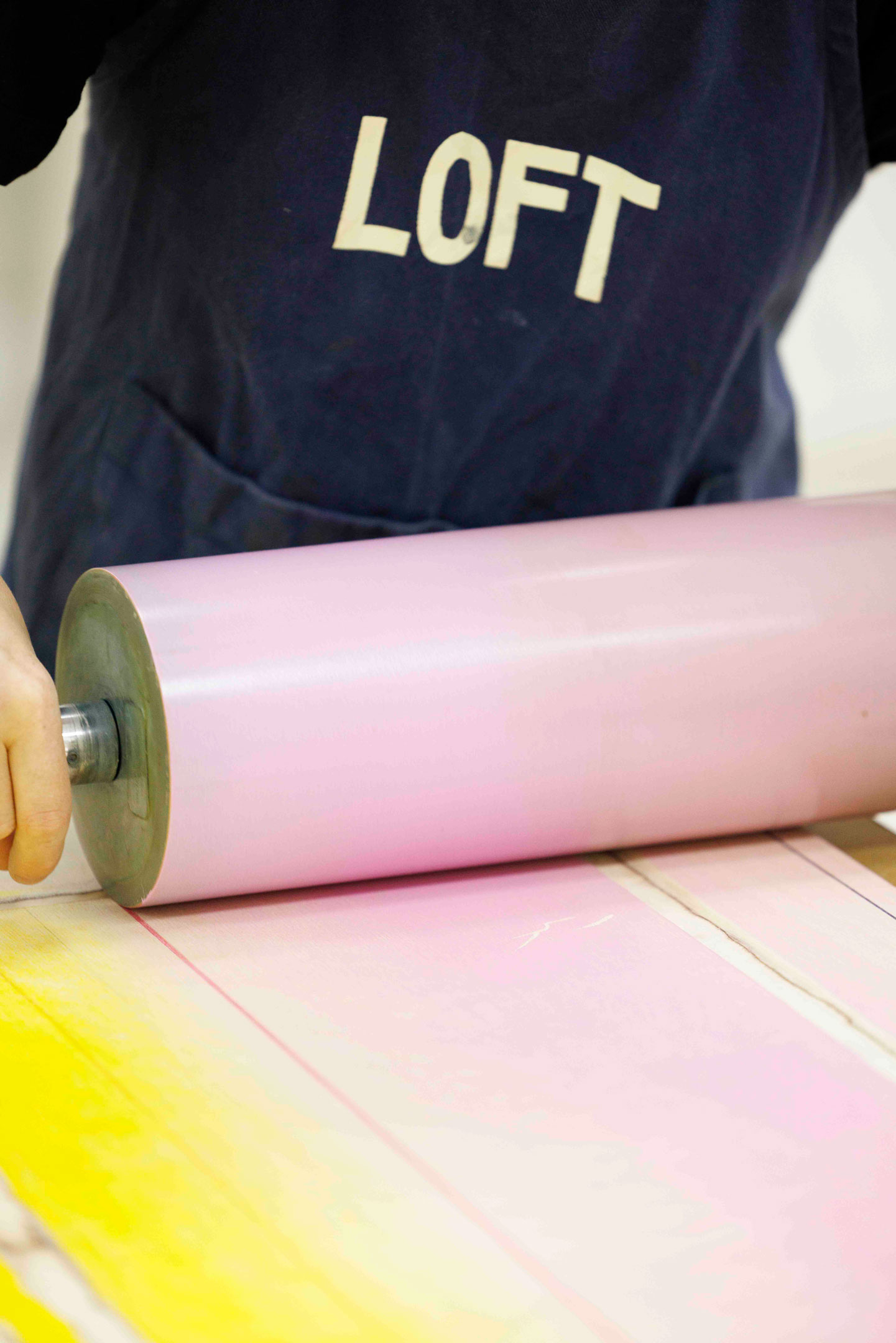
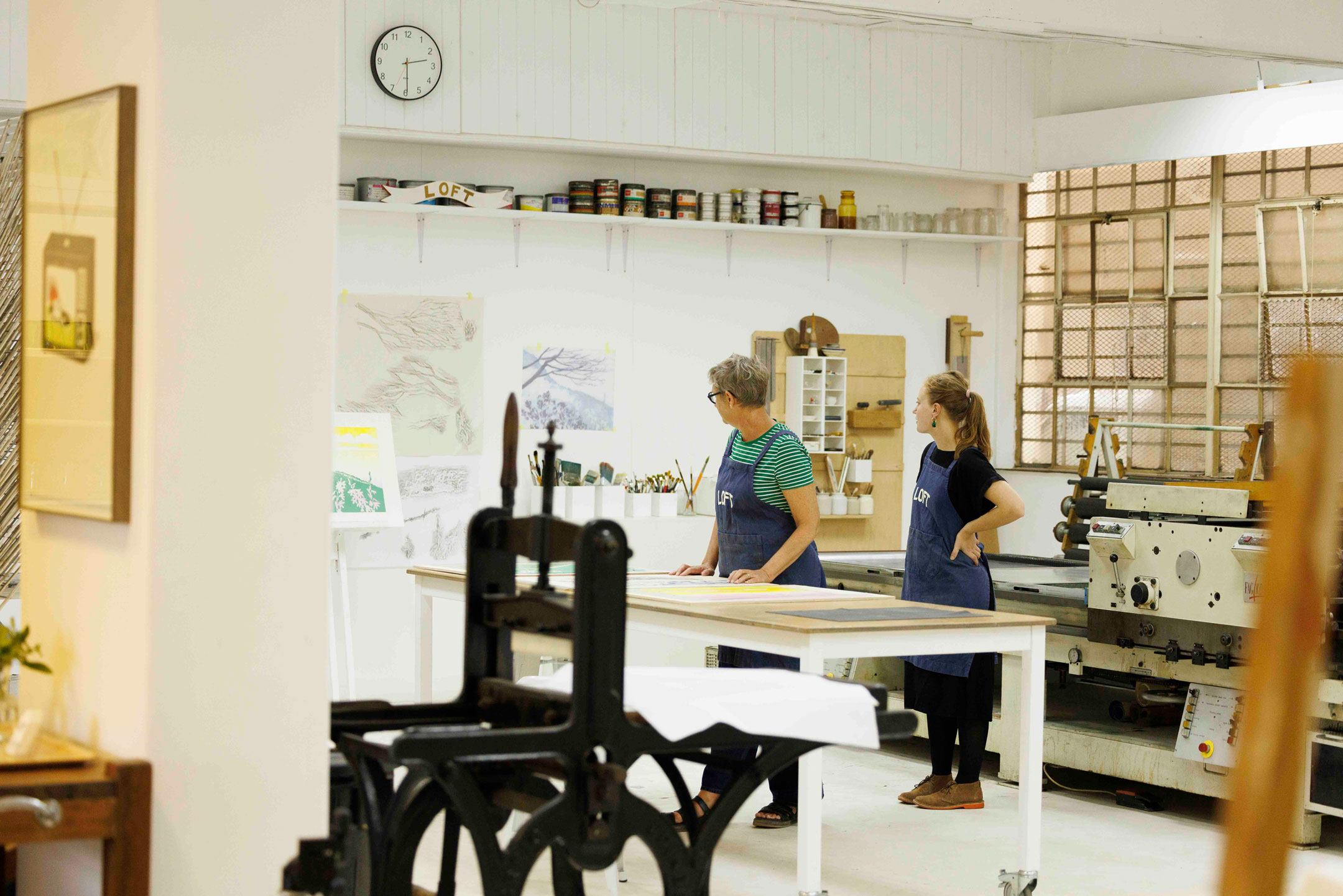
"Although I have worked on prints before, this was my first multi colour woodcut. Starting with mono prints to translate my drawings into a four colour print, Georgina led me through a layered approach to creating a printed image. The process of carving the wood blocks is both delicate and robustly physical at the same time, and the medium dictates the marks produced. Add to this, the mixing and layering of colours and the first proof was a heart stopping event. Much of the finessing of the image happened after the first proof, with removing and adding to the image as well as colour adjustments."
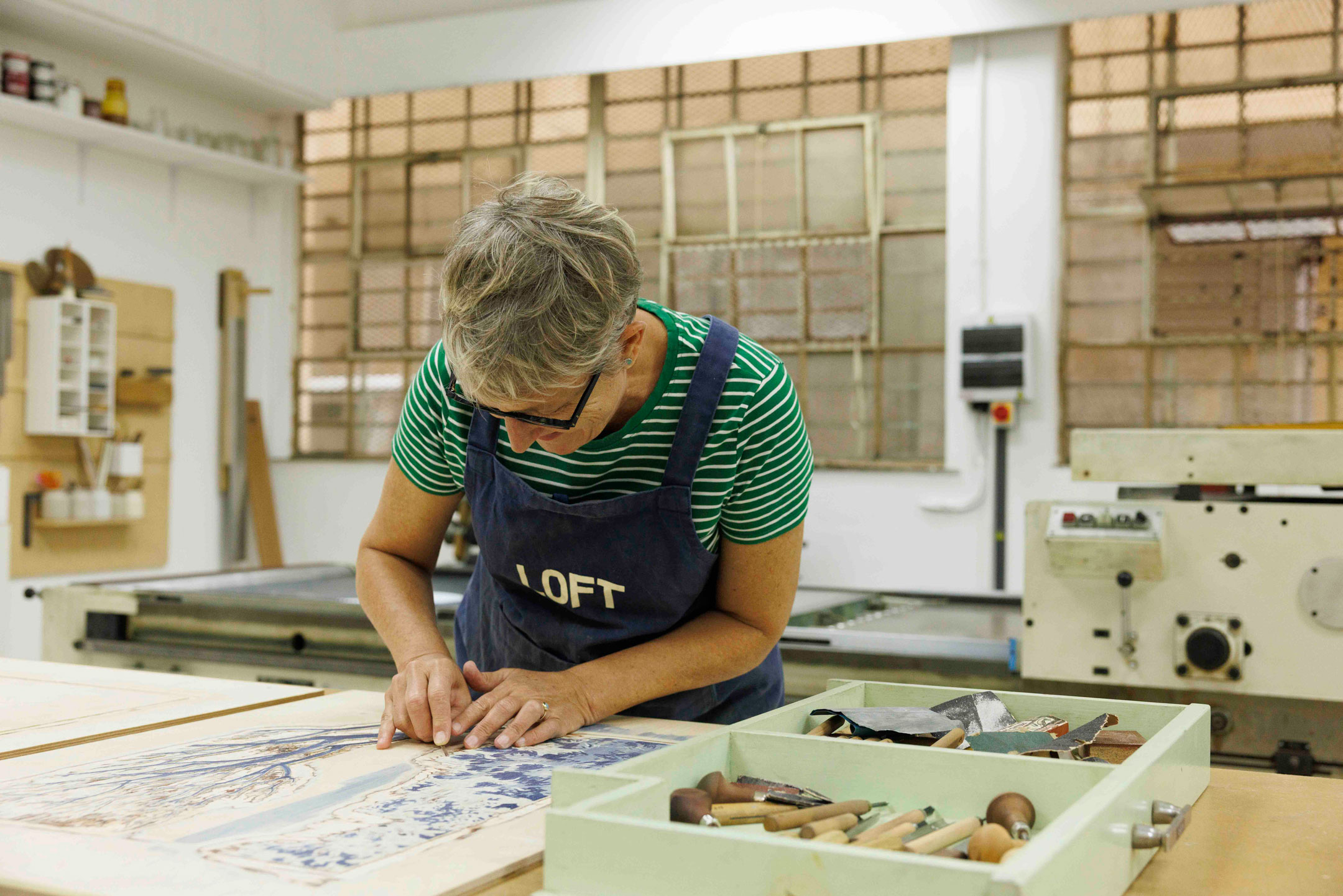
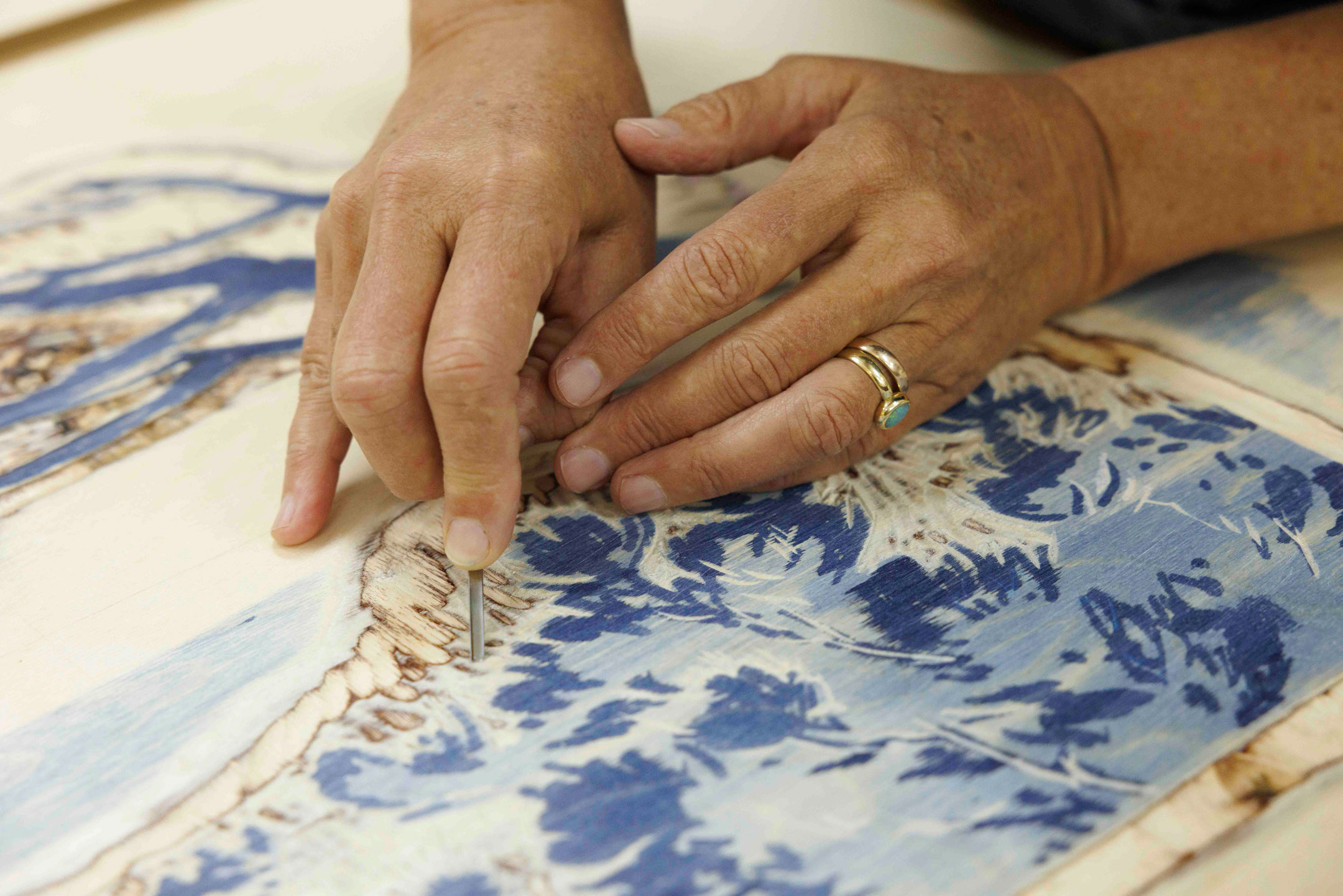
"The final print has been a surprising and delightful outcome. The whole process brings to mind Wayne Thiebaud’s take on printmaking 'Making a print is an orchestration between what you think you know and what you’re surprised to learn'". — Jenny Parsons
Biography
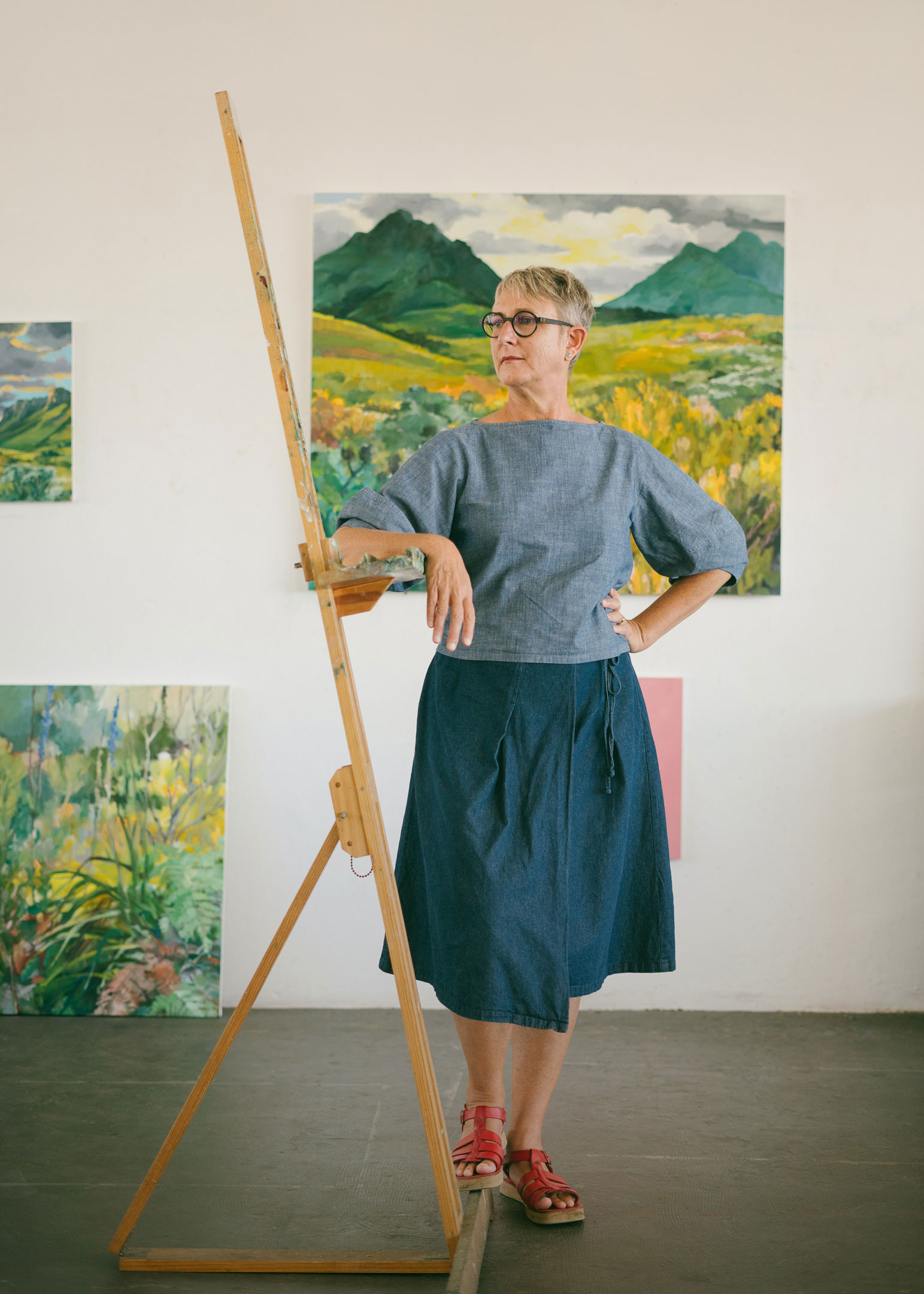
Jenny Parsons photographed by Retha Ferguson.
Jenny Parsons is an urban landscape painter working mostly in oil on canvas and chalk pastel. Parsons says of her practice, “A landscape painting is not merely a visual representation of the world. It is a metaphor for the human condition, in all its mystery. I paint to try to make sense of the fragility of our world, the passing of time, and our shared experiences of light, air, colour and space".
The city of Cape Town, with its areas of pristine nature interlocking with dense human habitation, provides a rich and diverse engagement for this artist. Parsons' paintings of Cape fynbos, the vegetation that is endemic to the Cape Peninsula, are a significant part of her exploration of brush mark, colour and light.
A city is a reflection of the choices that society has made over time. Parsons' urban landscape paintings document the relationship between our values and our occupation of the land. Cultivated gardens, degraded public land and the grass verges of our suburbs are landscapes that lack the grandiosity of the pristine. The plants that inhabit these urban man-made spaces are a visual language all of their own. They speak of our history, our politics and the ways in which we engage with nature.
Jenny's recent move into a fourth floor studio in the heart of industrial Woodstock, Cape Town, has lead to an exploration of the surrounding landscape. Views of houses, harbour, mountain and sea, as well as the ever changing weather and light, provide rich visual material.
The city of Cape Town, with its areas of pristine nature interlocking with dense human habitation, provides a rich and diverse engagement for this artist. Parsons' paintings of Cape fynbos, the vegetation that is endemic to the Cape Peninsula, are a significant part of her exploration of brush mark, colour and light.
A city is a reflection of the choices that society has made over time. Parsons' urban landscape paintings document the relationship between our values and our occupation of the land. Cultivated gardens, degraded public land and the grass verges of our suburbs are landscapes that lack the grandiosity of the pristine. The plants that inhabit these urban man-made spaces are a visual language all of their own. They speak of our history, our politics and the ways in which we engage with nature.
Jenny's recent move into a fourth floor studio in the heart of industrial Woodstock, Cape Town, has lead to an exploration of the surrounding landscape. Views of houses, harbour, mountain and sea, as well as the ever changing weather and light, provide rich visual material.